
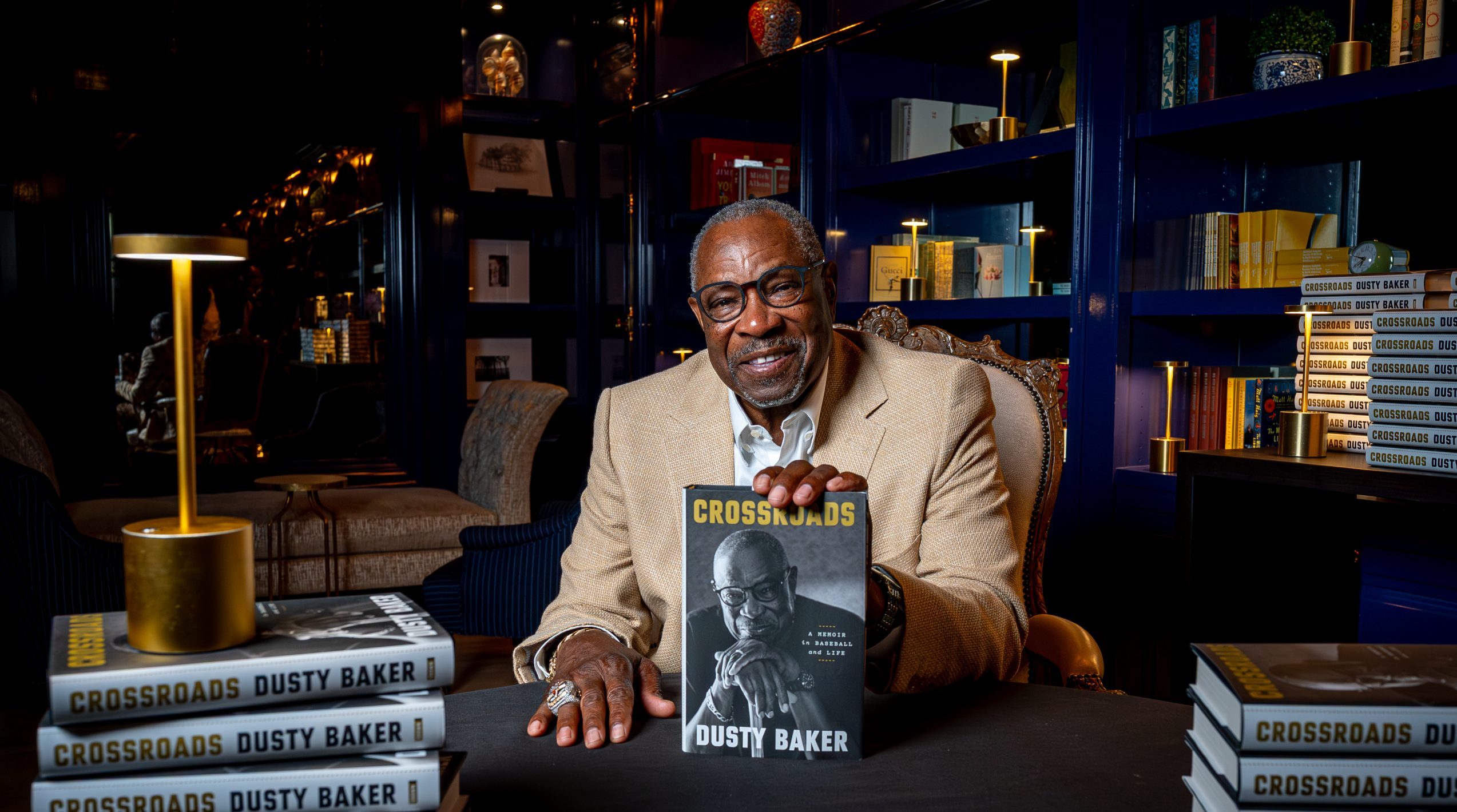
A LEGEND WHO FEELS LIKE A FRIEND
Many who know Dusty Baker as a baseball legend may not know the story behind his name.
No, his real name isn’t Dusty. Baker was named after his dad. “There was one Johnnie B. in our house, and that was my dad,” he said. As for how he became Dusty, that story is up for debate.The family had a large backyard with grass and one patch of dirt in the middle, and that’s where he played.
“They didn’t want to call me dirty, so they called me Dusty,” Baker said, drawing laughs from the crowd.
The name stuck. From then on, everyone called him Dusty. Well, almost everyone.
“I’d be in Dodger Stadium and someone would call me by my name and say, ‘Hey, Dusty!’ and I’d wave and keep on going. Somebody would say, ‘Johnnie!’” Baker said, snapping his head back as the crowd laughed again. “And they’d get my attention right away, and it was usually one of my homeboys.”
It was one of many stories Baker shared on August 6 at The Jacquelyn, where he sat down with ABC10’s Mark S. Allen to share his new book, Crossroads: A Memoir in Baseball and in Life, with our members and guests.
“It’s a snapshot of history. You’re reading about Dusty, you’re learning about Dusty, but at the same time, you learn about the world,” Allen said.
The evening felt much less like listening to a living legend tell his story on stage and more like sharing a chat with an unassuming stranger you might meet at a streetside café.
The conversation began with Allen asking Baker about inventing the high five and ended with Baker naming jazz icon Miles Davis as the “coolest dude he ever met.” In between, they touched on everything from childhood and family influences to Baker’s 45-year professional baseball career and his move from Southern California to Sacramento as a teen.
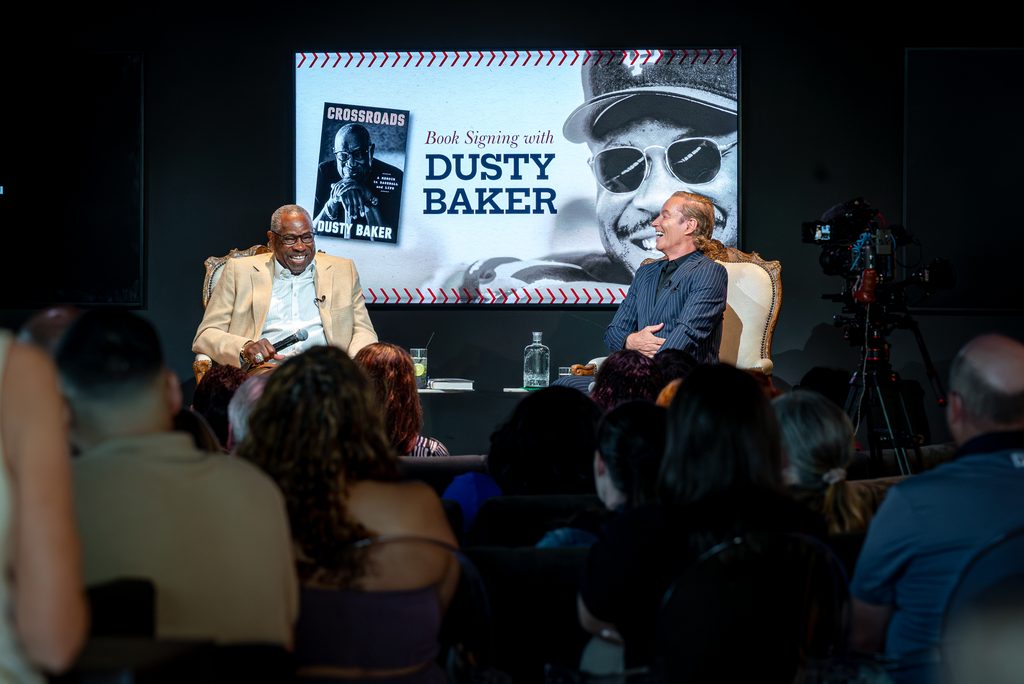
Baker attended Del Campo High School in Fair Oaks, where he and his brother were the only Black students — his siblings, too, were the only Black kids at their junior high and elementary schools. He was a standout multi-sport athlete, but playing against predominantly white schools meant facing racism, and playing against predominantly Black schools meant being seen as an outsider. “We helped a lot of people understand Black people,” Baker said, “and we helped race relations, even though we didn’t know we were.” He said it’s part of why Sacramento is the place he matured.
Those lessons continued to shape him long after high school, from a teacher who would influence his leadership as a World Series manager nearly 60 years later to a childhood lesson from his mom, whose voice still echoes in his mind every time he handwrites something.
“People tell me, ‘Man, you’ve got beautiful handwriting.’ That’s because, if my mom couldn’t read it, you’d have to do it over again,” Baker said. “And that’s horrible, I didn’t want to do it the first time!”
After the conversation, Baker moved to The Library, where everyone in attendance received a signed copy of his book and had the opportunity to speak with him personally, sharing stories and experiences of their own.
“Some stories were easy to recall. Some were emotions that you had suppressed and tried not to think about, but it was all part of your journey and all part of your story,” Baker said. “I feel sorry for people who can’t recall the past. I’ve lived a great life to this point, and I feel like I’ve got a lot more to live.”